
Laparoscopic Mitrofanoff Procedure for Neurogenic bladder
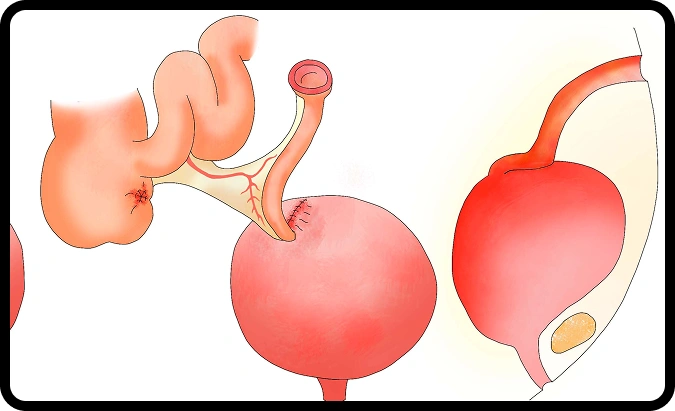
Overview
The Laparoscopic Mitrofanoff Procedure is a specialized reconstructive urological surgery designed for patients suffering from neurogenic bladder and other conditions where normal bladder emptying is not possible. This minimally invasive procedure creates a continent urinary channel, allowing patients to empty their bladder safely through clean intermittent catheterization (CIC) using a small abdominal opening.
Performed using advanced laparoscopic techniques, this procedure offers better bladder control, improved kidney protection, and a significant improvement in quality of life—especially for children, adolescents, and adults with long-term bladder dysfunction.
What Is A Neurogenic Bladder?
A neurogenic bladder occurs when the nerves controlling the bladder are damaged, leading to:
- Inability to empty the bladder completely
- Urinary incontinence or leakage
- Recurrent urinary tract infections (UTIs)
- High bladder pressure damaging kidneys
- Dependence on catheters or diapers
Common Causes of Neurogenic Bladder
- Spina bifida (myelomeningocele)
- Spinal cord injury
- Cerebral palsy
- Multiple sclerosis
- Stroke
- Diabetes-related nerve damage
When conservative treatments fail, Mitrofanoff surgery becomes a long-term, effective solution.
What Is the Mitrofanoff Procedure?
- The Mitrofanoff procedure involves creating a continent catheterizable channel between the bladder and the skin surface.
- The appendix is most commonly used as the channel
- If the appendix is unavailable, a small segment of intestine may be used
- One end is connected to the bladder
- The other end opens onto the abdominal wall (usually near the navel)
- This channel acts as a one-way valve, preventing urine leakage while allowing easy catheterization.
Why Choose the Laparoscopic Mitrofanoff Procedure?
Using laparoscopic (keyhole) surgery, the procedure is performed through small incisions, offering several advantages over open surgery:
Key Benefits:
- Minimal blood loss
- Smaller scars & better cosmetic outcome
- Reduced postoperative pain
- Faster recovery and hospital discharge
- Lower infection risk
- Greater surgical precision
How Is the Laparoscopic Mitrofanoff Procedure Performed?
- Laparoscopic Access
Small keyhole incisions are made in the abdomen. - Creation of Catheterizable Channel
The appendix or intestinal segment is carefully isolated. - Bladder Connection
One end of the channel is implanted into the bladder with a valve mechanism to prevent leakage. - Skin Stoma Creation
The outer opening is brought to the abdominal wall, often hidden in the umbilicus for cosmetic reasons. - Closure & Recovery
Internal and external catheters are placed temporarily to allow healing.
Is Mitrofanoff Procedure Combined with Other Surgeries?
Yes. Depending on bladder capacity and pressure, the Mitrofanoff procedure may be combined with:
- Bladder augmentation (Enterocystoplasty)
- Bladder neck reconstruction
- Anti-reflux surgery
Your urologist will decide the best surgical plan after detailed evaluation.
Recovery After Laparoscopic Mitrofanoff Surgery
Hospital Stay:
- Typically 5–7 days, depending on associated procedures
Post-Surgery Care:
- Catheter remains in place for 3–4 weeks
- Training for clean intermittent catheterization (CIC)
- Gradual return to daily activities
Long-Term Care:
- Regular catheterization through the stoma
- Periodic follow-ups with urologist
- Lifelong bladder care education
Most patients adapt well and enjoy greater independence and confidence.
Book a Consultation
If you or a loved one needs a kidney transplant, consult Dr. Amit Goel, a trusted Urologist & Kidney Transplant Specialist, to discuss robotic or open transplant options and donor procedures.
📍 C2/902, Parsvnath Exotica, DLF Phase 5, Sector 53, Gurugram, Haryana 122003
📞 +91 84470 18167