
Hydrocelectomy for Hydrocele
Overview
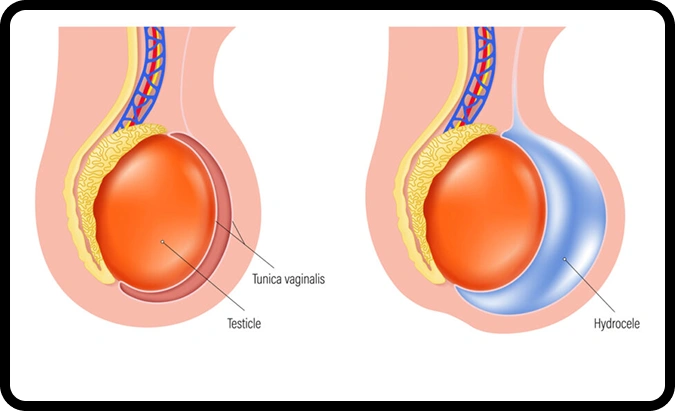
A hydrocele is a painless swelling of the scrotum caused by the accumulation of fluid around the testicle. When a hydrocele becomes large, uncomfortable, or persistent, hydrocelectomy is the most effective and permanent treatment.
At our center, hydrocelectomy is performed by an experienced urologist using modern surgical techniques to ensure quick recovery, minimal discomfort, and excellent outcomes.
What Is a Hydrocele?
A hydrocele occurs when fluid collects in the thin sac (tunica vaginalis) surrounding the testicle, leading to scrotal swelling. It may affect one or both sides and can occur in men of any age.
Common Causes of Hydrocele
- Congenital (present since birth)
- Inflammation or infection of the testis or epididymis
- Injury or trauma to the scrotum
- After hernia surgery
- Idiopathic (no identifiable cause)
Symptoms of Hydrocele
- Painless swelling of the scrotum
- Feeling of heaviness or discomfort
- Increased scrotal size over time
- Difficulty while walking or sitting (in large hydroceles)
- Cosmetic concern
Hydroceles usually do not affect sexual function or fertility but can cause significant discomfort if left untreated.
What Is Hydrocelectomy?
Hydrocelectomy is a surgical procedure in which the hydrocele sac is opened or removed and the accumulated fluid is drained, preventing future fluid collection. It is considered the gold-standard treatment for hydrocele.
When Is Hydrocelectomy Recommended?
Hydrocelectomy is advised when:
- Hydrocele is large or increasing in size
- Persistent swelling for several months
- Pain or discomfort
- Infection or inflammation suspected
- Cosmetic or lifestyle concerns
- Failure of conservative management
Types of Hydrocelectomy
1. Open Hydrocelectomy
- Most commonly performed
- Small incision made in the scrotum
- Fluid drained and sac everted or removed
2. Lord’s Plication (for Small Hydroceles)
- Minimal dissection
- Reduced bleeding and swelling
- Faster recovery
The surgical approach depends on the size and type of hydrocele.
Hydrocelectomy Procedure – Step-by-Step
Step 1: Pre-Operative Evaluation
- Physical examination
- Scrotal ultrasound (if needed)
- Blood and urine tests
- Assessment of medical fitness
Step 2: Anesthesia
- Performed under local, spinal, or general anesthesia
- Choice depends on patient preference and clinical condition
Step 3: Surgical Procedure
- Small incision made in the scrotum
- Hydrocele sac identified and opened
- Fluid drained completely
- Sac either removed or folded behind the testis
- Bleeding controlled carefully
- Testicle repositioned normally
- Incision closed with absorbable sutures
Surgery Duration: 30–60 minutes
Step 4: Completion & Dressing
- Sterile dressing applied
- Scrotal support given
- Patient shifted to recovery
Recovery After Hydrocelectomy
- Mild pain and swelling for a few days
- Scrotal support advised for 1–2 weeks
- Pain medications and antibiotics prescribed
- Resume light activities within 2–3 days
- Avoid heavy lifting and strenuous activity for 2–3 weeks
- Most patients return to work within a week
Is Hydrocelectomy Safe?
Yes. Hydrocelectomy is a safe and routine urological procedure with a high success rate and minimal risk of recurrence when performed by an experienced urologist.
Benefits of Hydrocelectomy
- Permanent relief from scrotal swelling
- Improved comfort and mobility
- Better cosmetic appearance
- Low recurrence rate
- Improved quality of life
Book a Consultation
If you or a loved one needs a kidney transplant, consult Dr. Amit Goel, a trusted Urologist & Kidney Transplant Specialist, to discuss robotic or open transplant options and donor procedures.
📍 C2/902, Parsvnath Exotica, DLF Phase 5, Sector 53, Gurugram, Haryana 122003
📞 +91 84470 18167