
Buccal Mucosal Graft , BMG Urethroplasties, End to End Urethroplasty
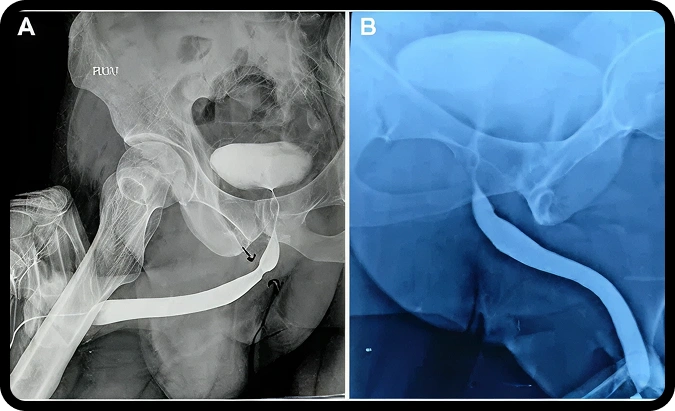
Overview
Advanced Reconstructive Surgery for Urethral Strictures
Urethral stricture disease is a condition where the urethra (the tube that carries urine from the bladder) becomes narrowed due to scarring. It can significantly affect urination, cause repeated infections, and impact a patient’s quality of life.
At Dr. Amit Goel Clinic, we specialize in advanced reconstructive urology procedures such as Buccal Mucosal Graft (BMG) Urethroplasty and End-to-End Urethroplasty, offering high success rates and long-term relief.
What Is Urethral Stricture Disease?
A urethral stricture occurs when the urethra becomes narrow or blocked, usually due to:
- Trauma or injury
- Infection
- Inflammation (like lichen sclerosus)
- Previous catheterization or surgeries
- Idiopathic causes (unknown reasons)
Symptoms
- Weak urine stream
- Straining to urinate
- Urinary retention
- Frequent UTIs
- Burning during urination
- Spraying of urine
- Blood in urine or semen
If not treated, the condition can cause bladder damage, recurrent infections, and kidney issues.
Buccal Mucosal Graft (BMG) Urethroplasty
What Is BMG Urethroplasty?
Buccal Mucosal Graft Urethroplasty is a reconstructive surgery where a graft of inner cheek lining (buccal mucosa) is used to rebuild the narrowed urethra.
Buccal mucosa is the best tissue for urethral reconstruction because it is:
- Naturally moist
- Flexible and elastic
- Resistant to infection
- Designed to withstand a wet environment
- Quick healing
This makes it ideal for long, complex, or recurrent urethral strictures.
When Is BMG Urethroplasty Needed?
Your urologist may recommend this surgery if you have:
- Long-segment strictures (>2–3 cm)
- Recurrent strictures after DVIU or dilatation
- Penile urethral strictures
- Bulbar or panurethral strictures
- Strictures caused by trauma, inflammation, or lichen sclerosus
- Failed previous urethral surgeries
How Is BMG Urethroplasty Performed?
This surgery has two main stages:
1. Harvesting the Buccal Graft
- A thin, rectangular piece of tissue is taken from the inside of the cheek.
- The area heals quickly and does not affect speech or eating long-term.
- The cheek lining regenerates naturally.
2. Repairing the Urethra
- The scarred, narrowed part of the urethra is opened along its length.
- The graft from the cheek is sutured onto the opened urethra to widen it.
- The graft becomes part of the urethra over time, increasing its diameter and function.
Depending on the technique, grafts may be placed:
- Dorsally (on top of the urethra)
- Ventrally (below the urethra)
- Lateral onlay
The choice depends on stricture location and surgeon’s expertise.
Benefits of BMG Urethroplasty
- High long-term success rate (85–95%)
- Suitable for long and complex strictures
- Natural tissue with excellent compatibility
- Low recurrence of stricture
- Preserves sexual function
- Minimal donor site issues
Recovery After BMG Urethroplasty
- Hospital stay: 1–2 days
- Catheter duration: 2–3 weeks
- Mild cheek discomfort for a few days
- Soft diet recommended initially
- Avoid strenuous activities for 3–4 weeks
- Sexual activity may be resumed after 6 weeks
End-to-End Urethroplasty (Excision & Primary Anastomosis)
End-to-End Urethroplasty (Excision & Primary Anastomosis)
Gold Standard Treatment for Short Urethral Strictures
End-to-End Urethroplasty is a reconstructive surgery in which the narrow portion of the urethra is completely removed, and the two healthy ends are directly joined.
It is considered the most effective treatment for short bulbar urethral strictures (usually ≤1–2 cm).
Who Should Undergo End-to-End Urethroplasty?
This technique is recommended for:
- Short strictures
- Trauma-related strictures
- Bulbar urethral strictures
- Strictures that have not responded to DVIU or dilatation
- Patients looking for a permanent solution
How End-to-End Urethroplasty Is Performed?
- A small incision is made in the perineal area (between scrotum and anus).
- The scarred or narrowed segment of the urethra is identified.
- The diseased segment is removed completely.
- The two healthy ends of the urethra are connected (anastomosed).
- The new reconstructed urethra provides a wide, stable passage for urine.
This procedure does not require grafts, making it simpler than BMG for short strictures.
Benefits of End-to-End Urethroplasty
- Highest success rate among urethral surgeries (95–98%)
- Permanent cure for short strictures
- Faster healing compared to graft procedures
- Minimal recurrence
- Excellent functional outcomes
Recovery After End-to-End Urethroplasty
- Hospital stay: 1 day
- Catheter duration: 2–3 weeks
- Mild discomfort in the perineal area
- Return to routine activity within 2–3 weeks
- No heavy lifting for 4–6 weeks
- Sexual activity after 6 weeks
Book a Consultation
If you or a loved one needs a kidney transplant, consult Dr. Amit Goel, a trusted Urologist & Kidney Transplant Specialist, to discuss robotic or open transplant options and donor procedures.
📍 C2/902, Parsvnath Exotica, DLF Phase 5, Sector 53, Gurugram, Haryana 122003
📞 +91 84470 18167