Robotic Post Chemotherapy Retroperitoneal Lymph Node dissection PC-RPLND for Testis Tumour
Overview
Post-chemotherapy retroperitoneal lymph node dissection (PC-RPLND) is a specialized surgical procedure performed for testicular cancer patients who have residual lymph node masses after completing chemotherapy. With the evolution of robotic surgery, PC-RPLND has become safer, more precise, and associated with quicker recovery.
Our urology and uro-oncology center provides state-of-the-art Robotic PC-RPLND, ensuring the highest level of surgical accuracy with minimal complications.
What Is PC-RPLND?
PC-RPLND (Post-Chemotherapy Retroperitoneal Lymph Node Dissection) is a surgery performed to remove remaining lymph node masses in the retroperitoneum (the area behind the abdomen where lymph nodes drain the testicles).
Even after chemotherapy, some patients retain:
- Residual tumours
- Fibrosis/scarring
- Teratoma (chemotherapy-resistant cells)
- Persistent lymphadenopathy
- PC-RPLND ensures removal of this remaining disease to prevent recurrence.
Why Is Robotic PC-RPLND Performed?
Robotic surgery offers significant advantages in this complex procedure due to:
- High magnification 3D vision
- Tremor-free precision
- Better access in deep retroperitoneal areas
- Improved nerve-sparing capability
It is particularly beneficial in post-chemotherapy cases, where tissues may be fibrotic or stuck to vital structures.
Who Needs PC-RPLND?
Your urologist may recommend robotic PC-RPLND if you have:
- Residual lymph node mass >1 cm after chemotherapy
- Persistent tumour markers
- Growing teratoma syndrome
- Residual teratoma or viable tumour on imaging
- Non-seminomatous germ cell tumour (NSGCT) where post-chemo nodes remain
It plays a crucial role in curative treatment for advanced testicular cancer.
Symptoms & Indications
PC-RPLND is usually based on imaging findings, but patients may experience:
- Persistent back/abdominal pain
- Palpable mass
- Elevated tumour markers
- CT/MRI showing residual nodes
Even if asymptomatic, residual masses need evaluation to avoid recurrence.
How Robotic PC-RPLND Is Performed?
1. Pre-operative Assessment
- CT scan/MRI
- Tumour marker evaluation (AFP, β-hCG, LDH)
- Review of chemotherapy response
- Cardiac & anesthesia clearance
2. Surgical Technique
- Performed through small keyhole incisions
- Retroperitoneal area accessed using robotic instruments
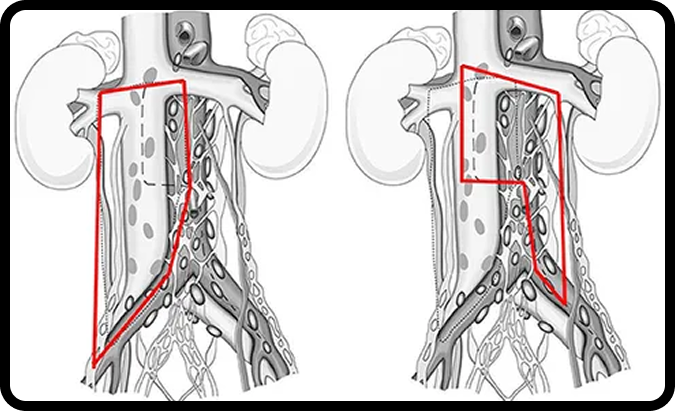
- Precise removal of lymph nodes from designated templates
- Preservation of vital structures including:
- Aorta & vena cava
- Renal vessels
- Sympathetic nerves (to maintain ejaculation)
- Aorta & vena cava
3. Nerve-Sparing PC-RPLND
Whenever possible, nerve-sparing techniques are used to preserve:
- Ejaculatory function
- Fertility potential
- Quality of life
4. Duration & Hospital Stay
- Surgery duration: 3–6 hours (depending on complexity)
- Hospital stay: 2–4 days
- Early mobilization encouraged
Benefits of Robotic PC-RPLND
Compared to traditional open surgery, robotic PC-RPLND offers:
- Smaller incisions & minimal scarring
- Lower blood loss
- Reduced postoperative pain
- Faster recovery
- Improved visualization of complex anatomy
- Higher nerve-sparing rates
- Faster return to normal activities
Risks & Possible Complications
While robotic PC-RPLND is safe in experienced hands, potential risks include:
- Bleeding
- Injury to surrounding organs/vessels
- Chylous leak
- Temporary digestive symptoms
- Infection
- Rare need to convert to open surgery
- Complication risks are significantly reduced with meticulous robotic technique.
Recovery After Robotic PC-RPLND
Most patients experience:
- Mobilization within 24 hours
- Return to work in 2–3 weeks
- Resume physical activity in 4–6 weeks
- Regular follow-up with tumour marker tests
- Follow-up imaging as advised
Our team provides a personalised recovery plan tailored to each patient.
Success Rates & Long-Term Outcomes
When performed at the appropriate stage and by an expert uro-oncologist:
- High cure rates for NSGCT
- Effective removal of chemotherapy-resistant teratoma
- Low recurrence rates
- Good preservation of fertility & sexual function
Robotic PC-RPLND offers an excellent balance between cure and quality of life.
Book a Consultation
If you or a loved one needs a kidney transplant, consult Dr. Amit Goel, a trusted Urologist & Kidney Transplant Specialist, to discuss robotic or open transplant options and donor procedures.
📍 C2/902, Parsvnath Exotica, DLF Phase 5, Sector 53, Gurugram, Haryana 122003
📞 +91 84470 18167